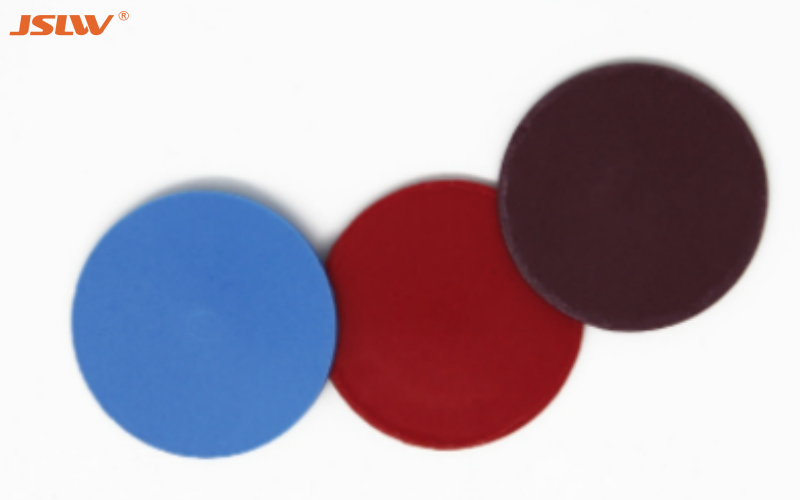
Pure PTFE gaskets are prized for their corrosion resistance but have a key weakness: they tend to deform under pressure and heat, leading to leaks. Filled PTFE gaskets solve this problem. By adding reinforcing fillers to the material, they gain enhanced strength and durability while keeping their excellent chemical resistance. Here’s how they outperform standard options.
1. Improving Creep and Cold Flow Resistance for Long-Lasting Seals
Under long-term stress or high-temperature environments, pure PTFE gaskets can undergo irreversible plastic deformation (creep), causing the gasket to thin, reducing bolt preload, and eventually leading to leaks. After filling modification, fillers like fiberglass and carbon fiber form a supporting skeleton, effectively limiting the movement of polymer chains. This greatly enhances the material’s resistance to creep and cold flow. Consequently, filled PTFE gaskets maintain bolt load better, reduce the need for flange maintenance, and provide significantly improved sealing durability.
2. Enhancing Wear Resistance and Mechanical Strength for Demanding Conditions
Pure PTFE is relatively soft and has average wear resistance. By adding fillers such as bronze powder, molybdenum disulfide, or carbon fiber, the surface hardness and compressive strength of the gasket are notably increased. For instance, in reciprocating pumps or mixing equipment, filled PTFE gaskets can withstand greater friction and compression without easily failing. Gaskets filled with carbon fiber, in particular, not only possess high strength but also excellent thermal conductivity, helping to dissipate heat generated by friction and further protecting the sealing surfaces.
3. Optimizing Compression and Recovery for Greater Sealing Reliability
Effective sealing requires a gasket not only to be compressed but also to “rebound” during pressure fluctuations. Modified filled PTFE gaskets maintain a low friction coefficient while offering superior compressibility and recovery. They can better adapt to minor flange surface irregularities or pressure fluctuations, maintaining a tight seal even under complex, varying temperature and pressure conditions. This results in more reliable sealing performance.
4. Broadening Application Scope to Meet Diverse Industrial Needs
With a variety of filler types available (such as graphite, fiberglass, barium sulfate, etc.), filled PTFE gaskets can be “tailored” for different operating conditions.
- In the chemical and petrochemical industries, they are used in pipelines, valves, and heat exchangers handling highly corrosive media, performing reliably even under elevated pressures and temperatures.
- In food, pharmaceutical, and paper industries, specially filled gaskets ensure no contamination of the medium while solving sealing challenges pure PTFE faces in steam environments.
- In demanding settings like chlor-alkali, acid production, and oil refining, their excellent comprehensive performance makes them an economical alternative to pure PTFE and some metallic gaskets.
5. Maintaining Chemical Stability, Preserving the “Plastic King” Nature
Despite the addition of fillers, the base PTFE resin’s resistance to strong acids and alkalis is not compromised. Filled PTFE gaskets still withstand almost all chemical media except molten alkali metals and elemental fluorine, maintaining a pH range of 0-14. This means they gain enhanced physical properties without sacrificing the most valuable corrosion-resistant trait of the “Plastic King”.
Conclusion
The role of filled PTFE gaskets extends far beyond simple “sealing.” Through material science modification, they precisely address the mechanical shortcomings of traditional pure PTFE gaskets. They not only retain excellent chemical resistance but also achieve qualitative leaps in creep resistance, wear resistance, and high-pressure performance.
In modern industrial production, which demands long cycles, stability, and safety, filled PTFE gaskets, with their comprehensively enhanced performance, not only solve the pain points of traditional seal failures but also provide a solid safety guarantee for industries like chemicals, pharmaceuticals, and power generation. Truly, they are the “versatile expert” in the field of industrial sealing.