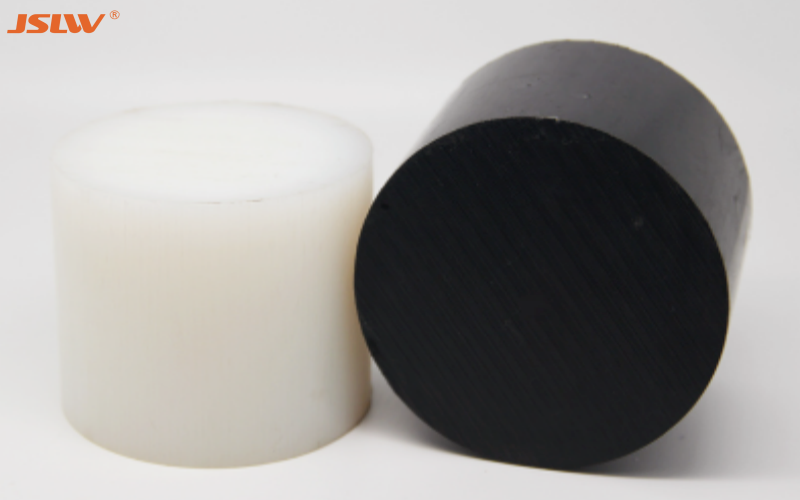
In the fields of industrial manufacturing, mechanical components, and DIY projects, nylon rods are a common and versatile engineering plastic material. They are lightweight, wear-resistant, self-lubricating, and offer considerable mechanical strength, making them suitable replacements for metal in many scenarios. However, the market offers a wide variety of nylon rods with significant performance differences. Choosing the wrong type can lead to part failure, shortened lifespan, or even safety risks. How can you select the most suitable nylon rod from so many options? This article will systematically outline the key points to consider.
1. Define Core Performance Requirements
This is the first and most crucial step in the selection process.
Mechanical Strength and Toughness: Consider the material’s tensile strength, compressive strength, and impact resistance. For parts bearing high loads or impacts, choose a high-toughness grade.
Wear Resistance and Self-Lubrication: Nylon inherently has good wear resistance, but its self-lubricating properties are especially critical in unlubricated or dry friction environments, reducing the coefficient of friction and wear.
Temperature Resistance: Understand the normal and extreme temperatures of the operating environment. Standard nylon degrades under prolonged high temperatures, while heat-resistant grades can withstand higher temperatures.
Chemical Resistance: If the operating environment involves exposure to oils, solvents, or chemicals, it’s essential to choose a nylon type with corresponding corrosion resistance.
2. Understand the Main Types of Nylon Materials
Common nylon rods are mainly divided into the following types, whose characteristics determine their applications:
PA6 (Nylon 6): Balanced overall performance, good toughness, high impact and fatigue resistance. It is the most widely used general-purpose material.
PA66 (Nylon 66): Offers improved stiffness, strength, and heat resistance compared to PA6, but with slightly lower toughness. Suitable for structural parts requiring higher strength and temperature resistance.
MC Nylon (Cast Nylon): Has a higher molecular weight, offering significantly better mechanical properties, wear resistance, and dimensional stability than PA6 and PA66. Often used for heavy-duty gears, bushings, etc.
Reinforced Nylon (e.g., Glass-Fiber Reinforced): Incorporates materials like glass fibers to greatly enhance stiffness, strength, and heat resistance, though toughness may decrease and wear resistance might be affected. Suitable for applications requiring high rigidity and low deformation.
3. Consider Key Specifications and Processing
Dimensional Accuracy: Select the tolerance grade for diameter and length based on drawing requirements. Precision parts require nylon rods with high-precision extrusion.
Color and Appearance: Common colors include natural (beige), white, and black. Color can sometimes relate to additives or material grade (e.g., some weather-resistant grades are often black). The appearance should be uniform, free from bubbles and cracks.
Machinability: Nylon is easy to machine through turning, milling, drilling, etc. However, note its hygroscopicity (moisture absorption). Proper conditioning before or after machining may be necessary to reduce internal stress or achieve stable dimensions.
4. Evaluate Operating Environment and Cost
Environmental Factors: Consider humidity (nylon absorbs moisture, affecting dimensions and strength), UV exposure (outdoor use requires anti-aging grades), and whether there is contact with food (requiring food-grade certification).
Cost-Effectiveness: Choose based on meeting performance requirements at the best value. PA6 is typically the most economical, PA66 and MC Nylon are more expensive, and reinforced types are even costlier. Consider the part’s lifespan, maintenance costs, and replacement frequency holistically to achieve optimal overall cost.
5.Conclusion
Choosing the right nylon rod is not difficult; the key lies in a systematic evaluation. First, clearly define the performance requirements and operating environment of the part. Next, match these needs with the most suitable type of nylon material. Finally, verify that the specifications, processing requirements, and cost align with the overall project goals. By mastering these points, you can make an informed and reliable choice among the plethora of products, allowing nylon material to fully leverage its advantages of lightweight, durability, and cost-effectiveness to ensure the success of your project.