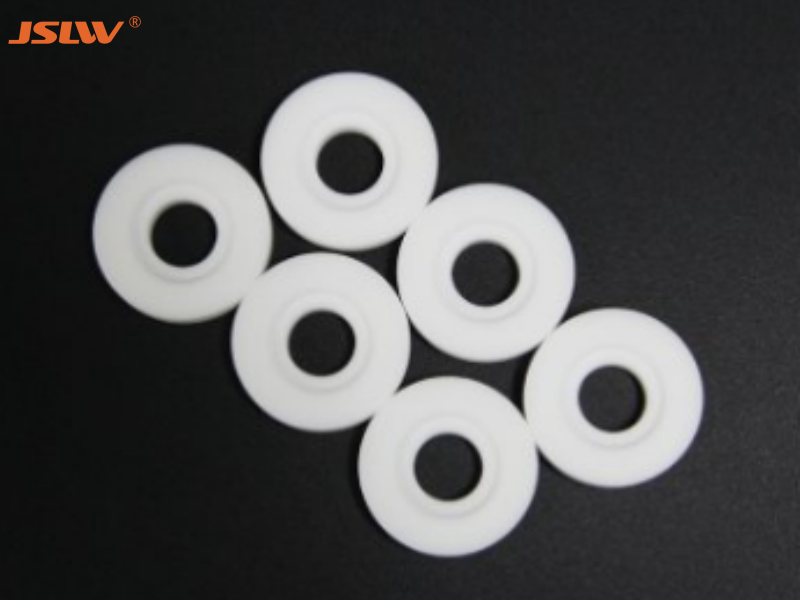
In the fields of industrial design and mechanical engineering, reliable sealing solutions are often the key to the long-term stable operation of equipment. Polytetrafluoroethylene (PTFE) O-rings, with their unique material properties, have become the preferred sealing element in numerous demanding working conditions. These seemingly simple small rings silently safeguard the safety and efficiency of equipment across various industries, from aerospace to food and pharmaceutical production.
Primary Application Scenarios
1. Chemical and Petrochemical Industry
In environments such as chemical production and petroleum refining, equipment is often exposed to highly corrosive media (e.g., strong acids, alkalis, organic solvents). PTFE O-rings can resist almost all chemical substances, making them irreplaceable sealing components in pumps, valves, reactors, pipeline connections, and other areas, ensuring zero leakage of hazardous media.
2. Semiconductor and Electronics Manufacturing
Cleanroom environments have extremely high requirements for contamination control, and PTFE material itself does not release particles or contaminate media. Additionally, its excellent insulation properties make it an ideal choice for high-purity chemical delivery systems, chip manufacturing equipment, and vacuum chamber seals.
3. Food and Pharmaceutical Equipment
PTFE is one of the few materials approved by agencies such as the FDA and EU for contact with food and pharmaceuticals. In food processing machinery, filling lines, and pharmaceutical reaction equipment, PTFE O-rings ensure sealing without contaminating products, meeting stringent hygiene standards.
4. Aerospace and Automotive Industries
From aircraft hydraulic systems to engine components, and from automotive fuel systems to transmissions, PTFE O-rings can withstand extreme temperature fluctuations and high-pressure conditions while maintaining stable sealing performance. Their low friction characteristics also help reduce wear on moving parts.
5. Medical and Laboratory Equipment
Medical devices, analytical instruments, and laboratory equipment often come into contact with various chemical reagents and require high precision and reliability. The use of PTFE O-rings in these fields ensures the long-term accurate operation of equipment and the reliability of experimental results.
6. Vacuum and Cryogenic Engineering
In vacuum equipment and cryogenic storage systems (e.g., liquid nitrogen, liquid oxygen containers), traditional rubber seals can become brittle and fail at low temperatures. PTFE O-rings, however, retain their elasticity at extremely low temperatures, ensuring sealing integrity.
Selection and Usage Considerations
Although PTFE O-rings offer exceptional performance, correct selection is crucial:
Consider the chemical compatibility with the working media.
- Confirm the temperature and pressure ranges.
- Pay attention to the surface finish requirements for installation.
- For dynamic seals, evaluate their compression set characteristics, which differ from those of rubber O-rings.
Summary
Thanks to their chemical inertness, temperature resistance, and cleanliness, PTFE O-rings have become a key component in solving challenging sealing problems in modern industry. From precision laboratory instruments to massive chemical plant reactors, from human implantable medical devices to aerospace equipment for space exploration, these inconspicuous sealing rings are silently performing their duties in countless critical applications.